The Fence Line Effect: What Beaver Dam's Meta Data Center Really Means for Home Values
August 13, 2026
August 13, 2026
Ask two people in Beaver Dam what a $1 billion data center down the road did to home values, and you'll get two confident, contradictory answers. One says nothing has changed except more trucks on Highway 33. The other says a neighbor sold land for a fortune, so everyone's property must be worth more now too. Both are half right, and the half that's missing is the part worth understanding before you shop this market.
The data center itself is real and it's large. The site sits on 520 acres that were previously part of the Alliant Energy Commerce Park, and property records show Meta paid roughly at least $10.4 million for that land, then purchased at least another 226 acres in Beaver Dam and neighboring Trenton from private landowners. Those private acquisitions are the transactions that generate headlines, because they aren't ordinary home sales. They're assembly deals, negotiated parcel by parcel with the handful of owners who happened to sit inside the boundary the project needed. Everyone else in Beaver Dam was watching from outside a fence line that a small number of neighbors happened to be standing on the wrong, or right, side of.
Wisconsin has seen this pattern before, most dramatically in Port Washington, where a separate data center project turned individual landowners into overnight millionaires. Members of the Karrels family and their family farming business earned at least $20 million, and Bonnie Schlenvogt sold her Lake Drive home and 65 acres for $3.44 million, nearly eight times the fair market value of $437,000. Those numbers belong to Port Washington's Ozaukee County land deals, not Beaver Dam's, but the mechanism is the same one at work in Dodge County: when a company needs a specific footprint, it pays whatever it takes to close the deal with the handful of owners who hold that footprint. It does not pay a premium to the neighborhood.
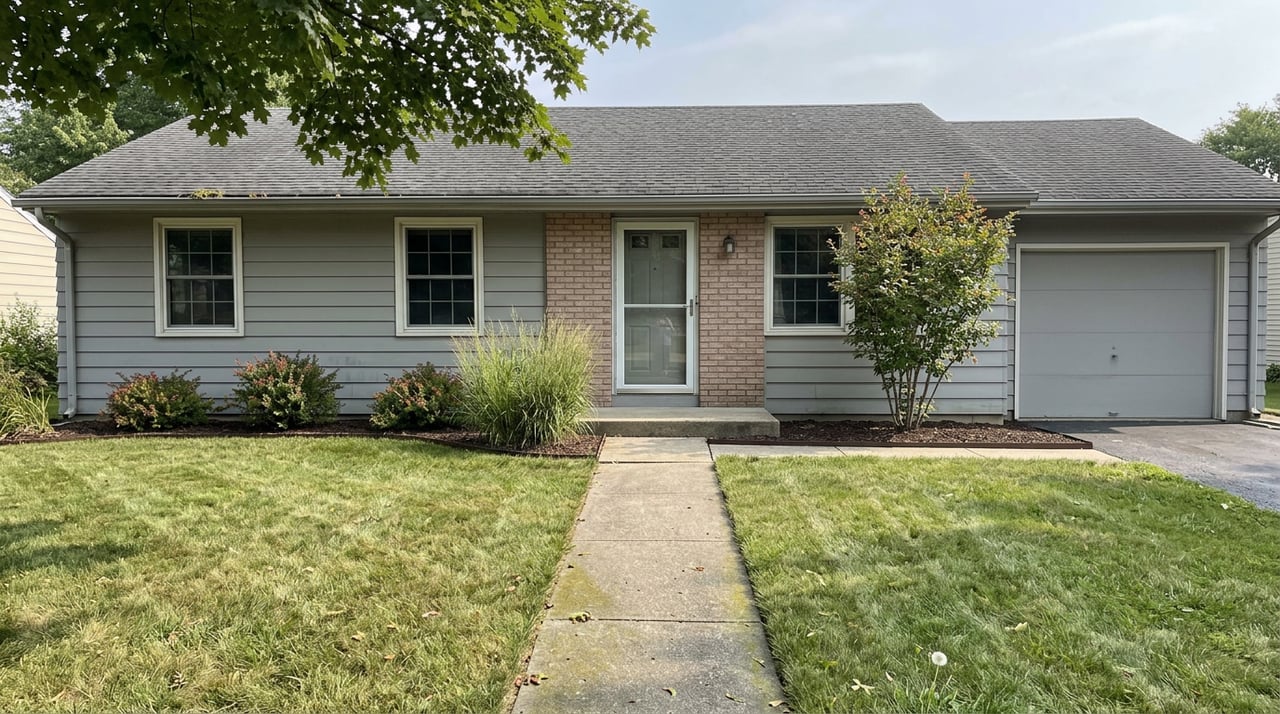
That distinction matters for anyone researching Beaver Dam because the windfall stories you've read about are describing site assembly, not a housing market repricing itself. If you're touring a three-bedroom ranch three streets from the Commerce Park boundary, the fence line story doesn't apply to that house. It applied to specific acreage the company needed, and that acreage has already changed hands.
The scale mismatch here is worth sitting with, because it explains why so many people assume this project must reshape everything around it. Meta's new Beaver Dam data center could use up to 220 megawatts of power. For reference, Alliant's West Riverside Energy Center outside Beloit had an output of 730 megawatts when it began service in 2020, enough to power more than 550,000 homes, which means 220 megawatts could power over 165,000 homes, based on those same figures. Beaver Dam itself, according to the 2024 American Community Survey, had 7,831 housing units. The facility being built here could theoretically power more than twenty times the entire housing stock of the city it sits in.
That's the scale an AI entrepreneur and executive-in-residence at UW-Whitewater was describing when he said the project's power demand would "dwarf most small cities in Wisconsin." It's an accurate way to describe the infrastructure. It is not, on its own, a description of what happens to home prices two miles away.
Wisconsin Watch put that exact question to labor economists and urban planners, and the answer they gave was more measured than the headlines. A University of Wisconsin-Milwaukee labor economist told the outlet that in more rural communities or near smaller data centers, the trickle-down effects could prove more modest, perhaps a few new restaurants and housing units. That's a meaningful qualifier. It means the realistic upside for a place like Beaver Dam looks like incremental local business growth and some new construction, not a citywide repricing driven by data center proximity alone.
The same reporting noted that growth from projects like this one could also be less concentrated, with growth spilling into neighboring cities as employees work at the center but live elsewhere. If that pattern holds here, the housing demand generated by permanent data center jobs may not even concentrate inside Beaver Dam's city limits. It could just as easily land in whatever commuting-distance town a given worker prefers, which is a very different demand curve than the one implied by "a data center is coming, so buy here now."
Here's where the two stories finally meet. As of May 2026, the average Beaver Dam, WI home value is $295,671, up 5.6% over the past year. As of June 2026, the average home value across Wisconsin is $328,778, up 4.3% over the past year. Beaver Dam is appreciating a bit faster than the state as a whole, which is worth noting, but it is nowhere near the kind of movement you'd expect if a billion-dollar project were mechanically lifting every home price in town. A 1.3 percentage point gap over the statewide average is the sort of thing you'd expect from a healthy local economy with a large employer coming online, not from a citywide land rush.
This is the number that should replace the assumption most researchers walk in with. The data center did not turn Beaver Dam into the next Port Washington. It added a modest, real tailwind to a market that was already moving, while a small and specific set of parcels captured the dramatic upside everyone read about.
One question that comes up often with a project this size is whether local property taxes will rise to cover new roads, utilities, or infrastructure. According to the city's own project documentation, the costs to develop the site are anticipated to run just over $1 billion, and TID 10 project plan activities require no public borrowing, with all infrastructure costs, public and private, being fronted by the company. That's a specific, checkable answer for anyone weighing whether this project will show up as a line item on a future tax bill. As structured, it isn't designed to.
There's also a direct household-level piece to the deal. Meta pledged $15 million to Alliant's Hometown Care Energy Fund, which provides energy-cost assistance to area households, and the company projects up to 1,000 skilled-trade jobs at peak construction and more than 100 permanent positions once the facility is running. Wisconsin's Economic Development Corporation had already designated the Commerce Park a certified development site since 2019, meaning this wasn't a location the state stumbled into. It was prepared for exactly this kind of project years in advance.
If Beaver Dam is on your list because of what you read about Meta, a few things are worth separating before you shop:
None of this means Beaver Dam is a weaker market than the headlines suggest. It means the headlines are describing a different market than the one you'd actually be buying into.
Does living near the data center site affect my home's value right now? Not in a way the current data supports. The dramatic sale prices reported near data center projects apply to specific parcels acquired for site assembly, not to the surrounding neighborhood's resale market.
Should I expect Beaver Dam home prices to keep outpacing the state average? That depends on whether permanent job growth and any associated housing demand materialize once the facility comes online, which the project has targeted for 2027. Until then, the most reliable read on the market is the same one you'd use for any Wisconsin city: current sales activity, not projected employment.
If you're weighing Beaver Dam against Green Lake, Markesan, Ripon, or any of the other Dodge and Green Lake County communities we cover, the honest starting point is always the fundamentals in front of you rather than the biggest headline. That's the kind of grounded read we bring to every conversation at Green Lake Properties, whether you're comparing a lakefront estate or a modest ranch three streets from a construction site. Contact us when you're ready to talk through what a specific property, in a specific town, actually looks like right now.

Personalized guidance and market expertise designed to help you make confident real estate decisions.
491 HILL ST GREEN LAKE, WI 54941