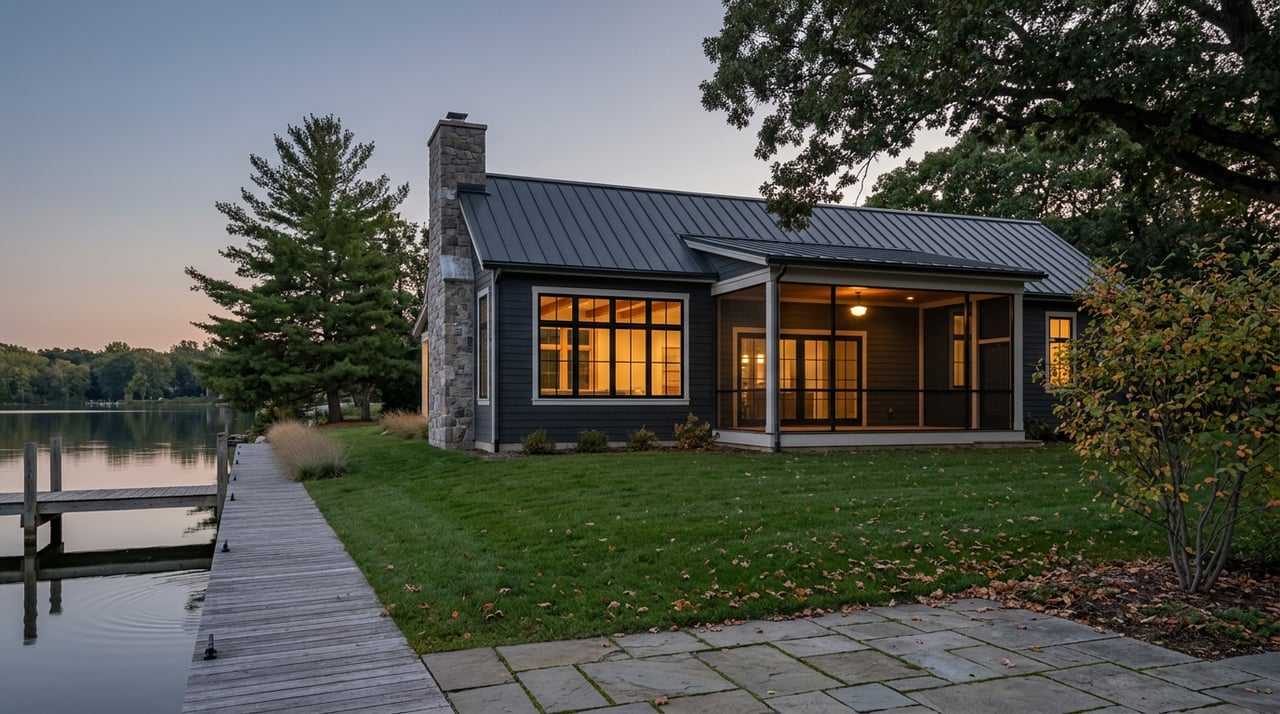
The Gate on Main Dam Road Closed September 8, and That's How Markesan Actually Marks Fall
September 17, 2026
September 17, 2026
Nobody in Markesan checks a calendar to know summer is over. They check whether the gate on Main Dam Road is still open.
That gate, the one that lets vehicles back into Grand River Marsh Wildlife Area, follows a fixed and fairly unglamorous rule from the Wisconsin DNR: it opens each spring in time for the fishing opener and closes on the Tuesday after Labor Day. This year that fell on September 8. If you drove out Main Dam Road looking for an evening walk or a late canoe run and found the gate shut, you weren't unlucky. You were simply looking a day too late, because the marsh doesn't run on a school-year calendar or a harvest calendar. It runs on its own.
That single gate closing is a small administrative fact. What makes it worth paying attention to is what else lines up around it. Within the same two or three weeks, the town's only public history museum has its final regular Saturday of the year and one special Sunday that isn't part of its normal rotation at all, and the marsh itself flips from a place you can drive into for an evening walk to a place with entirely different rules about who gets in and when. None of these three things were coordinated by anyone. They just happen to land in the same narrow window every year, which means the person who only tracks one of them is missing the actual shape of how fall arrives here.
The gate closing on Main Dam Road doesn't mean the marsh is closed. It means the easy way in is closed. Nearly 7,000 acres of open marsh, upland prairie, and shrub carr sit west of Markesan, straddling Green Lake and Marquette counties, and most of that acreage stays accessible on foot, by canoe, or by kayak all season. What changes is whether you can drive the interior road to reach it quickly, and that access doesn't come back until the DNR reopens the gates for gun deer and muzzleloader season later in the fall.
Layered on top of that is a second, stricter rule that has nothing to do with the road. The westernmost section of the property, marked with yellow DNR signs and referred to on the department's own property page simply as "the refuge," is closed to entry of any sort from September 1 through November 30, with one exception: deer hunting during the gun and muzzleloader seasons. Not hiking. Not birding. Not a canoe pulled quietly along the edge. That closure has already been in effect for over a week by the time most people notice the gate on Main Dam Road.
The rest of the marsh keeps its own quirks, too. No motorboats or electric motors are allowed anywhere on the property, in any season, which is a detail that surprises people who assume a 7,000-acre marsh means open water for anything with a hull. Pheasant hunting on the property carries a 2 p.m. closure that doesn't apply to pheasant season everywhere else in the state. And the farm fields inside the property double as dove hunting ground each fall, a use easy to miss if you think of the marsh purely as a waterfowl destination.
None of this is exotic. It's the same set of rules the DNR has run for years. What's easy to miss is that it all resets in the same handful of days that also happen to be the last chance to get inside a building most people in Markesan have driven past a hundred times without stopping.
The Grand River Valley Museum and Train Depot, at 214 E. John St., keeps a short public season. It's open the second and fourth Saturday of the month, May through September, from 1 to 4 p.m., or by appointment. That means this September has exactly one remaining regular open day, September 26, and then the building goes quiet on its own schedule until next May.
Although September 12 has passed, the regular Saturday schedule brackets Heritage Day between it and September 26. The Markesan Area Chamber of Commerce lists a Heritage Day at the museum on September 20, a Sunday, outside the normal second-and-fourth-Saturday pattern. It's the kind of date that only shows up if you're actually watching the Chamber's calendar rather than assuming the museum runs on autopilot.
What's inside is worth the trip regardless of which date you catch. The main building, donated in memory of a local husband and wife, holds period rooms built out like a shoemaker's shop, a dentist's office, a haberdasher's counter, and a banker's desk, alongside a room devoted to the history of the area's churches. To the west stands the actual Markesan train depot from the early 1880s, which holds a one-room schoolhouse dedicated to Leona Weber, one of the historical society's founding members, plus a depot agent's office with a working telegraph key. East of the main building sits the Arthur Jahns Memorial Agricultural Museum, a 58-by-150-foot barn packed with horse-drawn farm equipment, a blacksmith and harness shop display, and old milking equipment. The archive building itself has its own small history of changing hands, an apple-orchard storage building bought by a local family in 1957, sold to a co-op after the owner's death in the late 1980s, absorbed into a larger agricultural company in 2007, and finally purchased by the Markesan Historical Society in 2018 to house its cemetery records, obituaries, and old school annuals.
That kind of layered ownership is very Markesan. A building goes from apple storage to grain co-op to corporate warehouse to community archive over sixty years, and nobody thinks to mention it unless you're standing inside asking why the floor looks the way it does.
Little Green Lake and Lake Puckaway, both a short drive from town, hold walleye, bass, perch, bluegill, and muskie, and both see their heaviest boat traffic in the warmer months. As the marsh's refuge closure takes hold and the museum's public season winds down, the same stretch of water starts pulling in a different kind of visitor. The Grand River Marsh's open cattail wetland and oak savanna are recognized birding ground, with the Markesan Area Chamber of Commerce citing more than 260 recorded bird species across the greater Green Lake County area, and the marsh's marshland habitat draws herons, osprey, and cormorants alongside the waterfowl that use it as a staging ground during fall migration.
So the same three or four weeks that close the marsh gate and wind down the museum's public hours also shift what the area is actually being used for. Boaters give way to hunters and birders. Panfish traffic on the lake gives way to migratory waterfowl overhead. It's not a coincidence built by any single calendar. It's just what happens when a DNR wildlife refuge, a volunteer-run museum, and a pair of lakes all sit within a few miles of each other and all run on their own separate, slightly overlapping schedules.
| What | Status this fall |
|---|---|
| Main Dam Road gate | Closed September 8, reopens only for gun deer and muzzleloader season |
| Marsh refuge (western section) | No entry of any kind, September 1 through November 30, except deer gun/muzzleloader |
| Grand River Valley Museum, regular hours | September 26, 1 to 4 p.m. |
| Heritage Day at the museum | September 20, outside the regular Saturday rotation |
| Little Green Lake / Lake Puckaway | Shifting from summer boat traffic toward fall birding and waterfowl activity |
None of these dates were built to line up. The DNR sets its gate schedule around fishing season and deer season. The Historical Society sets its own hours. The lakes just follow the water temperature. But if you live near Markesan and only pay attention to one of these calendars, you'll miss the fact that the whole area quietly reorganizes itself in the same few-week stretch every year, and that missing this window means waiting until gun season for the marsh road, next May for a regular museum Saturday, and next September for another Heritage Day.
That's the part worth knowing, not because any of it is dramatic, but because it's the actual mechanism behind the phrase "fall is here" in a town like this. It isn't the maple trees changing color. It's a gate, a museum's short public calendar, and a lake trading one kind of traffic for another, all inside the same short window, year after year.
If you're weighing a move to Markesan or anywhere else around Green Lake and want someone who tracks these kinds of details as closely as the market itself, Green Lake Properties is a good place to start the conversation. Contact us when you're ready to talk specifics.
This article is general information, not legal, tax or financial advice. Consult a qualified professional about your situation.
Personalized guidance and market expertise designed to help you make confident real estate decisions.
491 HILL ST GREEN LAKE, WI 54941